Sign in. It’s quick, free and it’s up to you.
An account is an optional way to support the work we do. Find out more.
Sign in. It’s quick, free and it’s up to you.
An account is an optional way to support the work we do. Find out more.
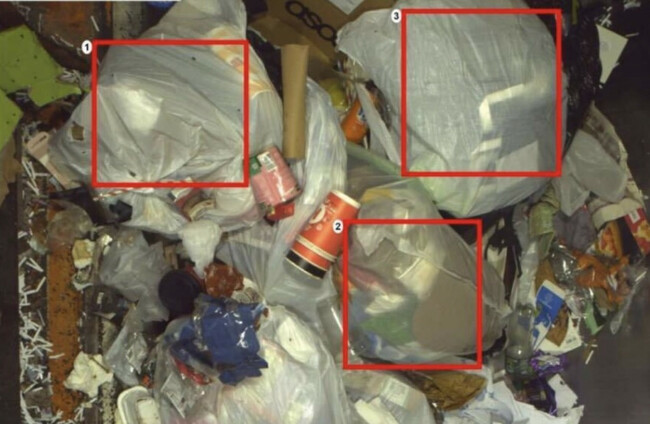
CUSTOMERS OF THE waste management company Panda have told The Journal that they felt uneasy after being sent pictures of the inside of their bins as part of a campaign to influence people not to put the wrong waste in the wrong bin.
They said that they took issue with the fact that there doesn’t appear to be an option to opt out of the initiative, and they also had some concerns about how having pictures of the inside of their bins processed by the firm could potentially infringe on their privacy.
The Data Protection Commissioner (DPC) has told The Journal that it is “aware” of the ‘Your Bin’ campaign launched by Panda Waste.
A spokesperson said that the DPC is “actively engaging with the company Beauparc Utilities Holdings Limited to ensure that processing is in line with the GDPR and all data protection requirements.”
Panda, one of the biggest waste management companies in the country, announced the campaign in March of this year as part of their efforts to bring down the level of contamination in recycling bins.
The company rolled out the initiative after an extensive trial period that saw cameras placed on trucks that service 80,000 customers in the Greater Dublin area.
The company said that data collected from this 18-month trial showed that the percentage of green bins being contaminated with non recyclable waste fell from 50 per cent to 5 per cent within that cohort.
The cameras are attached to the trucks waste is emptied into, and each bin has a chip that ensures that the household it comes from is identifiable.
Back in March, Conor Walsh of the Irish Waste Management Association said that more bin companies are to follow suit, and that while customers are not currently being fined for putting the wrong rubbish in the wrong bin, they can be charged more by companies that have evidence that they have repeatedly infringed on the guidelines.
One Panda customer explained that they live on a busy street, and that often rubbish is put into their bins by passers-by.
“I got an email to say this campaign would be starting and a few weeks later I got an email with a photograph of my black bin waste attached.
“It said that I had around four pizza boxes in my black bin waste and they should be placed in the recycling bin. I live nearby a pizza takeout, so these pizza boxes were put into my bin after I put it out for collection,” they said.
It’s been suggested by the Irish Waste Association (a trade group for companies in the sector) that other major waste management companies will follow suit and take up the waste imaging initiative that Panda has undertaken, and that this could even eventually lead to customers who repeatedly put the wrong rubbish in the wrong bin incurring additional charges from bin companies.
The customer who spoke to The Journal said that they are worried about this possibility, as they cannot stop other people from putting rubbish into their bins.
“I was a bit annoyed. I also have some concerns around privacy issues of people’s waste being photographed. Unfortunately I was told there is no option to opt out of the ‘your bin’ campaign, which again, feels a bit off to me,” they said.
The customer said that they support initiatives that educate people on recycling, but added that they feel there “must be a better way than taking photos of people’s bins”.
“It kind of feels like it is about shaming people,” they further said.
A second customer said that they were also sent a picture of their rubbish by the company.
“It came through in the afternoon after our green bin collection, but in the image they provided it wasn’t clear what they were trying to point out,” that user said.
(However, on inspection it is clear that this customer had put their recycling rubbish into the green bin using bin bags, which is against recycling guidelines, as they later learned).
“I wasn’t embarrassed over it or anything. I definitely felt a bit uncomfortable about it. It seems a bit like the programme Black Mirror with the way they can track the waste back to each house,” that customer said.
On its website, Panda explains that its cleaner bin imaging system aims to educate customers on “properly recycling practices”.
“The onboard camera system captures images of the waste after each bin is tipped into the truck.
“Once the Panda truck arrives at the depot after completing its route, the images are transferred to Panda’s internal CRM system for review.
“We have a dedicated team that reviews the images to spot anything that’s been misplaced. This helps us keep the information clear and make sure the right materials are going in the right bins,” the company further states.
Panda says that the images are anonymised, and it isn’t possible for them to be linked to an individual.
“Everything is handled in line with data protection regulations—your privacy is always respected,” the firm said.
It adds that the photos are taken with “deliberately low resolution” so “no personally identifiable information can be seen”.
It said the system is fully GDPR-compliant, and that staff who review images do not see any customers’ names or addresses.
“We are very happy with the way customers have reacted to the initiative. Typically, once customers are made aware of what we are doing, recycling behaviour improves immediately,” a spokesperson for the company said.
Panda also encourages customers to shred confidential and important documents.
The Journal asked Panda for comment, but did not receive a response by the time of publication.
Following the publication of this article, a spokesperson for the company said that the new system is “designed to help educate customers to make sure they use their bins correctly” and that customers will not be fined as a result of the system.
The spokesperson also said that making people aware that someone else is using their bin “is positive for the customer” because it would give them “the opportunity to stop other people using their bin”.
To embed this post, copy the code below on your site














have your say